


Spring
spring in ghalat

Turtle
beautiful baby turtle in ghalat

beauty of Ghalat nature
"Dame BID" place
Sunday, October 18, 2015
Friday, April 17, 2015
Zinatol Molok House
It
is another historical house in the old quarter of Shiraz. This has used
to be the house of Zinatol Molok, daughter of an eminent governor of
the city.
Built during the Qajar dynasty, Zinatol
Molok House is a beautiful Persian house with abundant rooms on sides
and a garden in the middle. Meanwhile, the house enjoys lots of colorful
decorations on the façade and inside.
Today, beside the historical importance
and architectural beauty of the house, it is home to a museum known as
the Madame Tussauds Museum of Iran.
The museum displays key figures,
particularly of the Shiraz history including Cyrus the Great, King
Darius I, King Aqa Mohammad Khan, Mansur Hallaj, King Karim Khan, Sadi,
Empress Atousa, and great musician Barbad.


Nasir al-Mulk Mosque
When someone brings up historical
architecture, we picture beautiful arches, towering spires, sculptures
and stone walls, but most of us probably don’t think of bright and
vibrant colors. Nasir al-Molk Mosque, as illustrated by these
photographs, is a striking and strong exception to the idea that
historical structures might have been somewhat lacking in colors. Not
only are its stained-glass windows richly colored, but its walls feature
a beautiful and vibrantly colorful array of painted geometric tiles.
Construction on the mosque was
begun in 1876 and completed in 1888 in Shiraz, Iran by the order of
Mirza Hasan Ali Nasir al Molk, a lord of the Qajar dynasty. The stained
glass windows capture the morning light and create a glorious play of
light on the floor of the mosque, earning it the name of the “Pink
Mosque” and inviting these photographers to capture its beauty. Although
some of the tiles that decorate it are rose-colored, it seems like the
mosque includes almost every color under the sun.
The mosque features many
elements of traditional Islamic architecture like iwan arches and a
central fountain for ablutions, but stained-glass windows are relatively
rare. Only a few other mosques, like the Masjid al-Aqsa and the Blue
Mosque in Istanbul, feature stained-glass windows.


Monday, July 7, 2014
Oldest and First Animation in the world at burnt city

Iran, Burnt City is one of the most important prehistoric sites of the country which was well developed during the third millennium BCE.
Spreading over a 300,000 hectare
area, Burnt City is recognized as mainland-Iran’s largest prehistoric
site. The city experienced four stages of civilization and was burnt
down three times, which is why it was named ‘Burnt City.’ Discovery of
hundreds of historical sites including 166 satellite villages together
with large numbers of archaeological relics, skeletons, and ancient
structures in the archaeological site of Burnt City makes it holder of
an unparalleled record in the history of archaeological activities in
Iran.
Judging by the artifacts recovered
in the area, the inhabitants seem to have been a race of intelligent
people who were both farmers & builders of various crafts. So far no
military ware has been discovered, suggesting the peaceful nature of
the residents. What is really strange about burnt city is the fact that
it has no connection to any other old civilizations in the area, as if
it completely came from elsewhere.
One of the prominent relics found
in the Burned City is a skull that according to the anthropological
studies is the first evidence of brain surgeries in prehistoric Iran.
Recent archaeological studies, has led into new discoveries in the
architectural style of this city’s buildings as well as finding the
biggest pre- historic clothe collection in the Middle East
Even more recently, Burnt City has been identified as one
of the rarest ancient cities in which women were in charge of their
family’s financial affairs!
Before the Burnt City, some 137 historical hills had been
identified by this Center in the vicinity of Burnt City historical site.
Archeologists believed that most probably these hills were settled by
the Burnt City inhabitants during the ancient times. The discovered
historical sites are located 6-8 kilometers from the Burnt City and some
cultural evidence such as broken clays similar to those discovered in
Burnt City have been unearthed in these hills.
Archeologists have also found a well-preserved building in
the residential area, covering around 80 square hectares of the total
151 square hectares of the ancient city.
Toward the end of the second millennium BC, Burnt City came
to a cultural standstill; and archeological evidence shows that this
ancient civilization of the Eastern plateau of Iran somehow vanished
from the face of the earth at the beginning of the first millennium BC.

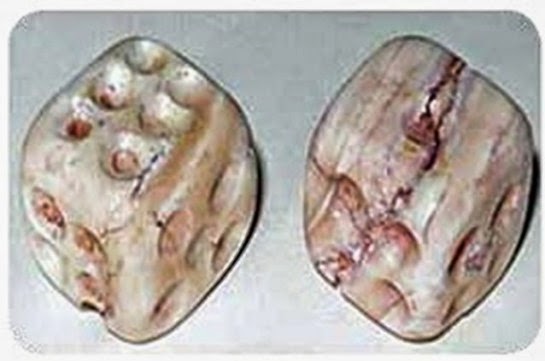
Last year there was the rather striking discovery out of Tehran of a 5000 year old "animation" of a goat found on an earthenware bowl. Like many, I found this fascinating and recently wanted to take a closer look at the actual sequence to see what its structure looked like. This ended up becoming a bit of an internet treasure hunt for me. First, I found the animated clip they had created from it:

But, when I dissected the animation, things really got interesting. It's made of 9 images, yet it features several repeated goat images (watch for the white dot on the goat's behind which appears and disappears). The way this animation was made simply took the overall background (note that the trees never change), then cut and pasted the goat figures several times in different places!
Upon further searching, I found this great page showing the archiving of the bowl, which actually looks like this:


This eyeball belongs to a sturdy woman who was between 25
to 30 years of age at the time of death. Skeletal remains of the woman
were found in grave number 6705 of Burnt City’s cemetery. The material
this artificial eyeball is made of has not yet been determined.
However, at first glance it seems natural tar mixed with
animal fat has been used in making it.” Initial studies on the eyeball
also suggest formation of an abscess in the eyelid due to long-term
contact with the eyeball. Moreover, remaining eyelid tissues are still
evident on this artificial eyeball.
Even the most delicate eye capillaries were drawn on this
eyeball using golden wires with a thickness measuring less than half a
millimeter. There are also some parallel lines around the pupil forming a
diamond shape. Two holes are also seen on the sides of this eyeball to
hold it in the eye socket. A number of clay vessels, ornamental beads, a
leather sack, and a bronze mirror have also been found in the grave of
this woman
Friday, July 4, 2014
Sights of shiraz part6: Vakil mosque


The Vakil Mosque (Persian: مسجد وکیل - Masjed-e Vakil) is a mosque in Shiraz, southern Iran, situated to the west of the Vakil Bazaar next to its entrance. This mosque was built between 1751 and 1773, during the Zand period; however, it was restored in the 19th century during the Qajar period. Vakil means regent, which was the title used by Karim Khan, the founder of Zand Dynasty. Shiraz was the seat of Karim Khan’s government and he endowed many buildings, including this mosque.[1]
Vakil Mosque covers an area of 8,660 square meters. It has only two iwans instead of the usual four, on the northern and southern sides of a large open court. The iwans and court are decorated with typical Shirazi haft rangi tiles, a characteristic feature of the art and industry of Shiraz during the latter half of the 18th century. Its night prayer hall (Shabestan), with an area of approximately 2,700 square meters, contains 48 monolithic pillars carved in spirals, each with a capital of acanthus leaves. The minbar in this hall is cut from a solid piece of green marble with a flight of 14 steps and is considered to be one of the master pieces of the Zand period. The exuberant floral decorative tiles largely date from the Qajar period.
sights of shiraz part5: Hammam-e-Vakil


Vakil Bath is an old public bath in Shiraz, Iran. It was a part of the royal district constructed during Karim Khan Zand's reign, which includes Arg of Karim Khan, Vakil Bazaar, Vakil Mosque and many administrative buildings.
sights of shiraz part4: Arg e Karim Khan


The building served as both a fort, and residence for its builder. Some of the residential rooms have been restored (and in some cases populated by slightly tacky dioramas)
The interior courtyard is filled with shady citrus trees, providing relief form the heat. The smell of orange blossoms pervades the courtyard in springtime. The park benches provide some privacy for couples to meet.
sights of shiraz part3: Tomb of Hafez


The Tomb of Hafez and its associated memorial hall, the Hāfezieh, are two memorial structures erected in the northern edge of Shiraz, Iran, in memory of the celebrated Persian poet Hafez. The open pavilion structures are situated in the Musalla Gardens on the north bank of a seasonal river and house the marble tomb of Hafez. The present buildings, built in 1935 and designed by the French architect and archaeologist André Godard, are at the site of previous structures, the most well-known of which was built in 1773. The tomb, its gardens, and the surrounding memorials to other great figures are a focus of tourism in Shiraz.
Friday, June 27, 2014
A new ways for tourists to make payments in Iran
.jpg)
As I have mentioned before one of the most important problems that tourists have in Iran is carrying cach, Credit cards are useless here, Due to sanctions you can't pay by credit card, in my previous post I told you about gift cards. That's a good way to have your money in the gift card and you can pay with that.
Today Iran tourism organization announced that they are issuing a kind of gift cards at the airprts, So when a tourist comes to Iran, He can pay cash in Iran Rial, Dollar or any other currencies and get one of those cards for the amount they are worth, and makes payments during the time he stays in Iran, And when he leaves the country he can return the card and get the remained balance in cash.
Wednesday, June 18, 2014
sights of shiraz part2: Vakil Bazaar


Vakil Bazaar (Persian: بازار وکیل) is the main bazaar of Shiraz, Iran, located in the historical center of the city.
It is thought that the market originally was established by the Buwayhids in the 11th century AD, and was completed mainly by the Atabaks of Fars, and only was renamed after Karim Khan Zand in the 18th century.
The Bazaar has beautiful courtyards, caravansarais, bath houses, and old shops which are deemed among the best places in Shiraz to buy all kinds of Persian rugs, spices, copper handicrafts and antiques.
Like other middle eastern Bazaars there are a few numbers of mosques and Imamzadehs constructed adjacent or behind the Bazaar.
The traditional shopping Mall of the old city, the tall brick vaulted domes shelter a plethora of shops, from fabric ('madam can have any colour, so long as it is black...') to spices and herbs, carpets and kitchenware.
sights of shiraz part1: The Shah e Cheragh


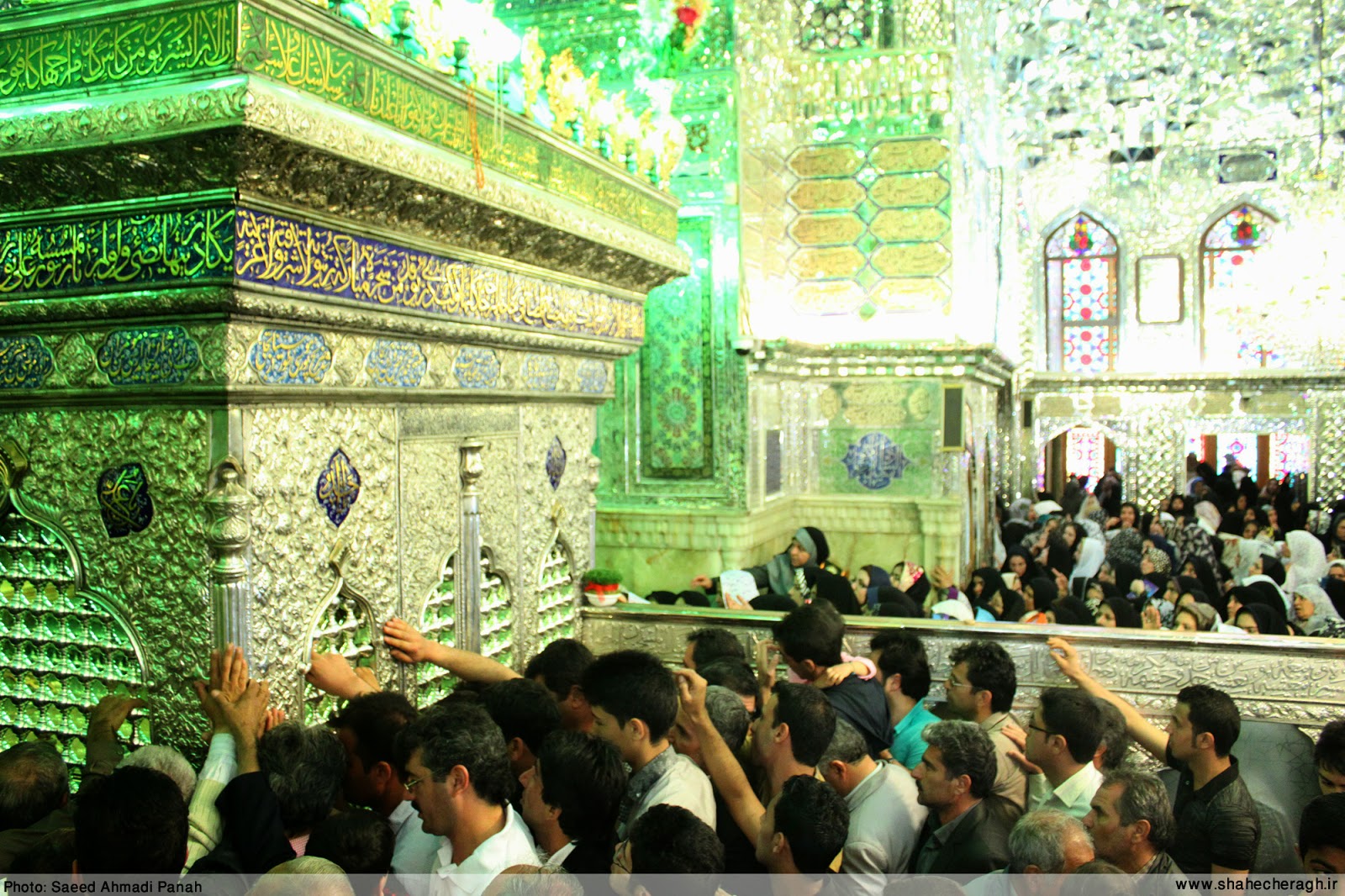

The Shah e Cheragh contains the elaborate mirror glass mausoleum of the two brothers, who fled to Shiraz during one of many periods of persecution of Shia Muslims by followers of a different version of their imaginary friend.
The once simple toms of Mir Ahmed and Mir Mohammad have been transformed into elaborate structures, topped by beautiful onion shaped domes. This site is an important pilgrimage site, and security is enforced. No photographs are permitted, so we could enjoy the relaxed peace of the wide courtyard of the complex undistracted by the need to seek out the perfect photo. Women must don a chador, which the women in the booth help to affix, but my wife Minuk found that the damn thing kept trying to fall off.
We first entered the Shrine of Mir Mohammad, at the rear of the courtyard, separate entrances provided for ladies and gentlemen. We parted, and wandered inside around the mirrored maze of the interior, finding the tomb at it's centre. It is very relaxed inside, folk sit on the carpets either talking quietly or praying. Everyone wants to touch or be near the tomb itself, inside a metal screen.
Outside again, to the larger shrine of Mir Ahmed, with its twin minarets, where the experience was similar, though busier. The stricture on photos not extending to those taken on mobile phones!
introduction to shiraz sights

in my next posts i am going to write about the sights of shiraz and i think it's important because all of them is actually close to Qalat and interesting to visit so lets do this
Monday, May 26, 2014
How to make payment in Iran?

carrying too much cash with you is not wise, The good news is you can buy Iranian gift cards which are like prepaid debit cards, it's called" Karte Hadieh" in Farsi. The best option is to use these cards in Iran, The banks sell them for the amount they are worth and you can buy them for any amount you like and of course you will pay the same price as the face value.
The gift cards are accepected in almost all the stores, restourants, hotels withing the country.
When you need cash, You can easily go to an ATM machine and cash them, Just keep in mind that you can only get 2000,000 Iran Rial ( almost $70 USD) Per day.
The best thing about these gift cards is that they have password, And only the card owner can use it, If they got lost or stolen, You can simply contact the issuer bank and ask them to freeze the money , and get a new one
Sunday, May 25, 2014
video clip about Ab arbizak the spring on the roof of rock
Don't get it worng! It's a springhead on the top Qalat mountain, The
source is on the roof of a rock, and the water falls from the roof, It's
amazing, isn't it? It's one of the sources of the Qalat first
waterfall. This video is recorded in Winter, As you see the treed don't
have ant leaf, But you got to see this place now, Much beautiful!
I a summer hot day, you can lie down there and feel the wind and enjoy the breeze! It's also a very nice place to camp and stay for couple of days.There are many other beautiful place, and I will try to describe them later, But do not forget Abarbizak


 there are many sumac planet on the way (Sumac is a tangy, lemony spice often used in Mediterranean and Middle
Eastern cooking. Try using it in salads instead of lemon juice or to
season grilled meat and fish. It’s also delicious sprinkled over hummus.)
there are many sumac planet on the way (Sumac is a tangy, lemony spice often used in Mediterranean and Middle
Eastern cooking. Try using it in salads instead of lemon juice or to
season grilled meat and fish. It’s also delicious sprinkled over hummus.)


I a summer hot day, you can lie down there and feel the wind and enjoy the breeze! It's also a very nice place to camp and stay for couple of days.There are many other beautiful place, and I will try to describe them later, But do not forget Abarbizak
Subscribe to:
Posts (Atom)


